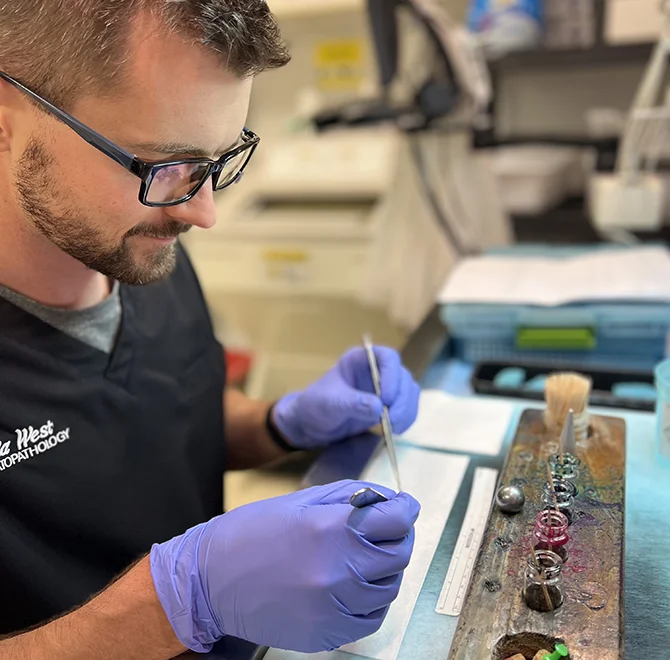
Trained at nationally respected programs, with deep experience in clinicopathologic correlation, inflammatory disease, and skin cancer diagnosis. Approachable, collaborative, and available for consultation.
Laboratory director
Gregory Wells, MD, FAAD
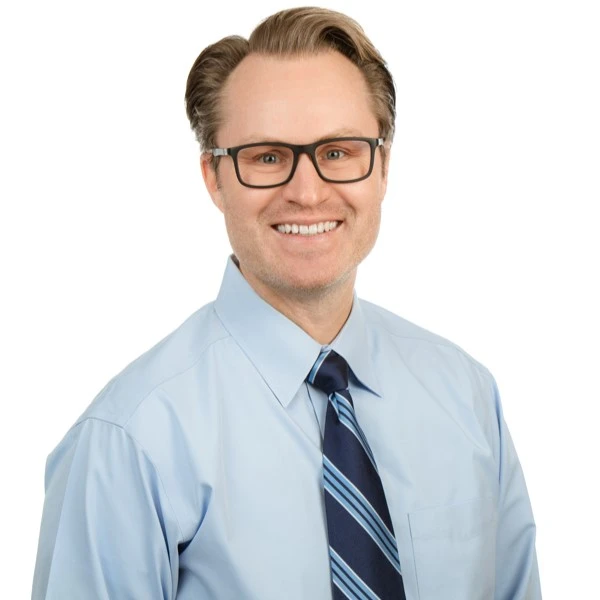
Dr. Gregory Wells completed medical school at Dartmouth Medical School, graduating with honors. He went on to complete his internal medicine internship, dermatology residency, and dermatopathology fellowship at Dartmouth-Hitchcock Medical Center in Lebanon, New Hampshire. He is board-certified in dermatology and micrographic dermatologic surgery, fellowship-trained in dermatopathology, and serves as lab director for Stratum Dx.
Dr. Wells has contributed to dermatology education and literature, including authorship in the Merck Manual and chapters in Lippincott’s Primary Care Dermatology. His diagnostic interests include melanocytic lesions, adnexal tumors, and cool rashes. He also serves as Assistant Professor of Dermatology at the Idaho College of Osteopathic Medicine.
Outside of medicine, he enjoys time with his family, the lake in summer, skiing in winter, BYU football and basketball, Brandon Sanderson novels, and pickleball.
Dermatopathologist
Jennifer Scott, MD, PhD

Originally from Orlando, Florida, Dr. Scott completed undergraduate studies at the University of Central Florida before earning her MD and PhD with honors at the Medical University of South Carolina. Her doctoral research focused on innate immunity and the effects of sex hormones on innate immune cells in lupus. She completed a combined residency in internal medicine and dermatology at Georgetown University, then a dermatopathology fellowship at Penn State.
She draws on that breadth in a dual role in general dermatology and dermatopathology. Her particular passion is inflammatory disease — interpreting lesions against the full clinical picture, and the conversations with clinicians that put the pieces together.
She is also passionate about complex medical dermatology. Outside of medicine, Dr. Scott enjoys French, nature, and traveling.
Dermatopathologist
Elizabeth Keiser, MD
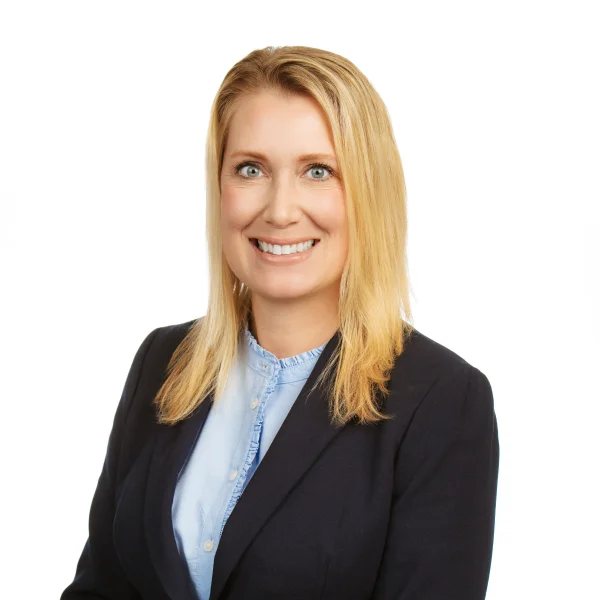
Originally from the San Francisco Bay Area, Dr. Keiser trained at UC San Diego, UCSF, Stanford, and UT MD Anderson Cancer Center, with additional training in epidemiology (MPH). She has lived and worked abroad, primarily in London.
She has a strong interest in digital pathology and machine learning, has given invited presentations at the United States and Canadian Academy of Pathology, and is a senior author on a Cell Reports Methods publication. She believes the best diagnoses come from integrating clinical insight with microscopic and photographic findings.
Outside of work, she is embracing Boise, along with her Bichon Frise, flute, classical music, skiing, and chocolate.